
Breathlessness While Climbing Stairs: Is It Just Aging, Lack of Fitness, or an Early Warning Sign of Heart Disease?
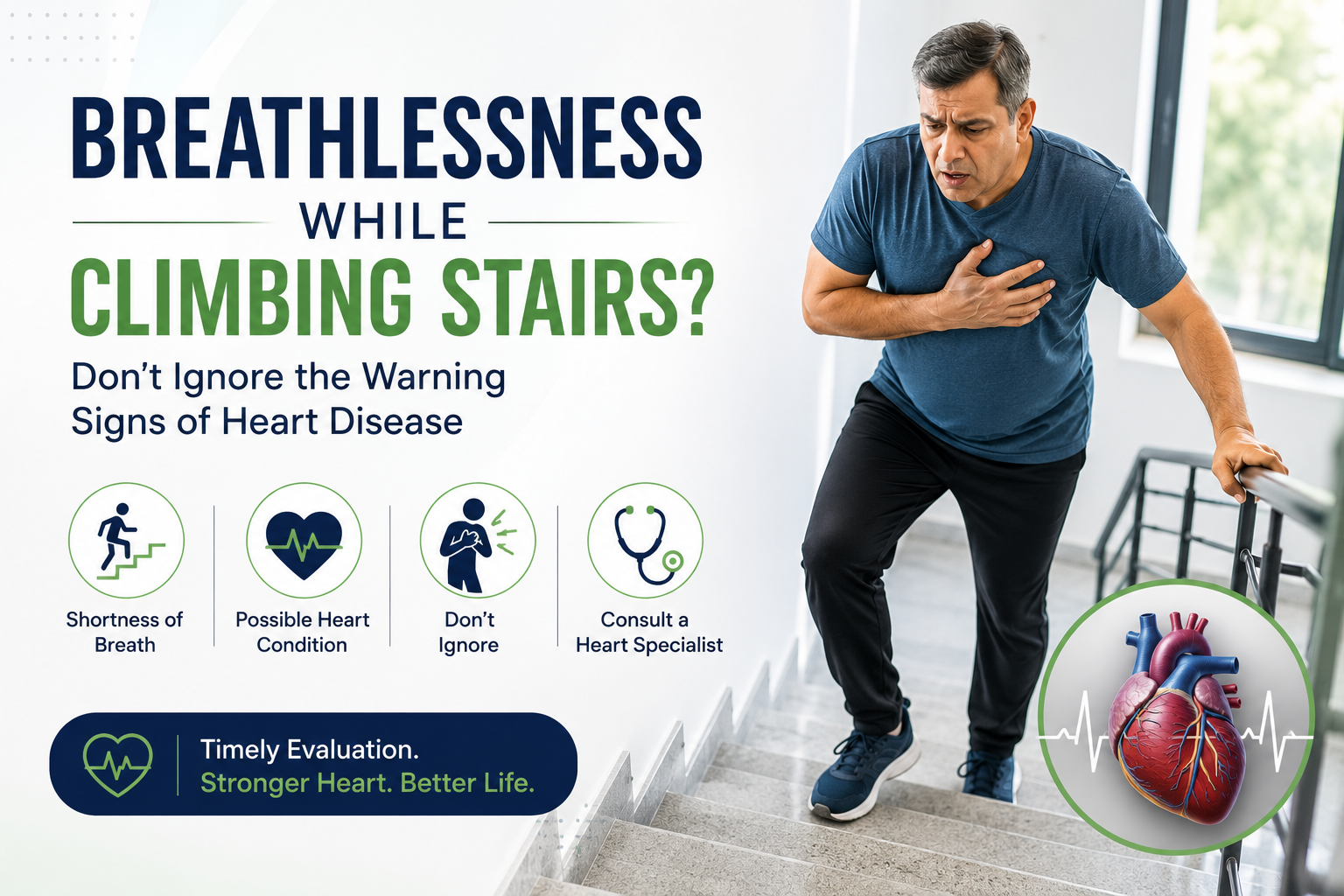
Most of us have experienced it at some point—climbing a flight of stairs and suddenly feeling short of breath. You pause for a few seconds, catch your breath, and move on, often blaming age, weight gain, stress, or lack of exercise.
But what if your body is trying to tell you something more serious?
Breathlessness while climbing stairs is one of the most commonly ignored symptoms of heart disease. In many cases, it may simply reflect poor fitness. However, when the symptom is new, worsening, or accompanied by fatigue, chest discomfort, or palpitations, it could indicate an underlying heart problem that requires medical attention.
In India, heart disease is affecting people at a younger age than ever before. Many patients who eventually require treatment for blocked arteries or heart valve disease recall experiencing unexplained breathlessness months before their diagnosis.
Understanding when breathlessness is normal and when it could be a warning sign can make a significant difference.
Why Do We Feel Breathless?
Breathing is the body’s way of supplying oxygen to organs and muscles. During physical activity, such as climbing stairs, the body requires more oxygen, and both the lungs and heart work harder to meet this demand.
If the heart or lungs are unable to keep up, you may experience:
- Shortness of breath
- Fatigue
- Chest heaviness
- Rapid heartbeat
- Dizziness
Occasional breathlessness after strenuous activity is normal. However, becoming unusually breathless during routine activities deserves attention.
When Is Breathlessness Considered Normal?
Breathlessness may not indicate disease if:
- You have recently started exercising.
- You are climbing multiple flights of stairs quickly.
- You are overweight and physically inactive.
- You are recovering from a viral illness.
- You are at high altitude.
In these situations, improving fitness levels and maintaining a healthy lifestyle often help.
However, if your symptoms are progressive or occur during everyday activities, you should not ignore them.
When Can Breathlessness Be a Sign of Heart Disease?
- Blocked Heart Arteries
The heart muscle receives oxygen through coronary arteries. When these arteries become narrowed due to cholesterol deposits, the heart struggles to pump efficiently.
Common symptoms include:
- Breathlessness while walking or climbing stairs
- Chest pain or heaviness
- Excessive sweating
- Fatigue
- Reduced exercise tolerance
Many people, especially those with diabetes, may experience breathlessness instead of typical chest pain.
- Heart Valve Disease
The heart contains four valves that ensure blood flows in the correct direction.
If a valve becomes narrowed or leaky, the heart must work harder to pump blood, resulting in:
- Breathlessness
- Fatigue
- Swelling in the legs
- Palpitations
- Reduced physical activity
Modern treatment options, including minimally invasive and endoscopic cardiac surgery, have significantly improved recovery for many patients.
- Heart Failure
Heart failure does not mean that the heart has stopped working. It means that the heart cannot pump blood efficiently.
Symptoms include:
- Breathlessness during activity
- Breathlessness while lying flat
- Swelling of feet and ankles
- Persistent fatigue
- Sudden weight gain due to fluid retention
Early diagnosis can help prevent progression and improve quality of life.
- Irregular Heart Rhythm
Abnormal heart rhythms can affect the heart’s ability to pump blood effectively.
Symptoms may include:
- Shortness of breath
- Palpitations
- Dizziness
- Fainting episodes
- Fatigue
Prompt evaluation is essential because some rhythm disorders increase the risk of stroke and heart failure.
Why Are Indians Experiencing Heart Disease Earlier?
Research shows that Indians tend to develop heart disease nearly a decade earlier than many Western populations.
Several factors contribute to this:
Diabetes
India has one of the highest numbers of people living with diabetes, a major risk factor for heart disease.
High Blood Pressure
Uncontrolled hypertension damages blood vessels and increases the risk of heart failure and coronary artery disease.
Sedentary Lifestyle
Long working hours, stress, and reduced physical activity contribute significantly to cardiovascular disease.
Smoking and Tobacco Use
Tobacco significantly increases the risk of blocked arteries and heart attacks.
Obesity
Excess weight increases the burden on the heart and contributes to diabetes and hypertension.
Family History
People with a family history of heart disease should be especially vigilant.
Warning Signs That Require Immediate Attention
Consult a heart specialist immediately if breathlessness is associated with:
- Chest pain or pressure
- Sweating
- Pain in the jaw, shoulder, or arm
- Palpitations
- Swelling of feet
- Dizziness or fainting
- Breathlessness that suddenly worsens
These symptoms could indicate a serious cardiac condition.
How Is the Cause of Breathlessness Diagnosed?
A thorough evaluation generally includes:
Detailed Medical History
Understanding when symptoms started and what triggers them.
Physical Examination
Checking heart sounds, blood pressure, and signs of fluid retention.
Electrocardiogram (ECG)
Evaluates the electrical activity of the heart.
Echocardiography
Assesses the pumping function of the heart and the condition of heart valves.
Stress Test
Determines how the heart responds during physical activity.
CT Coronary Angiography or Coronary Angiography
Helps identify blocked heart arteries.
Blood Tests
To evaluate cholesterol, diabetes, and cardiac biomarkers.
Can Breathlessness Be Prevented?
The answer is yes, in many cases.
Maintain a Healthy Weight
Excess body weight places additional strain on the heart.
Exercise Regularly
Aim for at least 150 minutes of moderate exercise every week.
Control Blood Pressure and Diabetes
Regular monitoring and medication compliance are essential.
Quit Smoking
Stopping tobacco use significantly lowers cardiovascular risk.
Follow a Heart-Healthy Diet
Consume more fruits, vegetables, whole grains, and lean proteins.
Get Regular Health Check-Ups
Early detection saves lives.
Why Early Evaluation Matters
Many patients wait until symptoms become severe before seeking medical advice. Unfortunately, heart disease often progresses silently.
Ignoring symptoms can lead to:
- Heart attack
- Heart failure
- Reduced quality of life
- Emergency hospitalization
- Sudden cardiac events
Timely evaluation allows treatment to begin before significant damage occurs.
The Importance of Modern Cardiac Care
Advancements in cardiac surgery and minimally invasive techniques have transformed patient outcomes.
Today, many heart procedures can be performed using:
- Minimally invasive cardiac surgery
- Endoscopic cardiac surgery
- Advanced valve repair techniques
- Coronary artery bypass surgery through smaller incisions
These approaches can offer:
- Less pain
- Faster recovery
- Shorter hospital stays
- Better cosmetic outcomes
- Early return to normal life
The Bottom Line
Not every episode of breathlessness while climbing stairs indicates heart disease. However, if your symptoms are new, progressive, or associated with fatigue, chest discomfort, or reduced exercise tolerance, your body may be giving you an important warning sign.
Your heart often speaks in subtle ways before a major event occurs. Listening to these signals and seeking timely medical evaluation can make all the difference.
If climbing a single flight of stairs leaves you unusually breathless, don’t simply blame age or lack of fitness. Understanding the reason behind your symptoms may help protect your heart and your future health.