
Can a 90% Heart Blockage Be Treated Without Bypass Surgery?
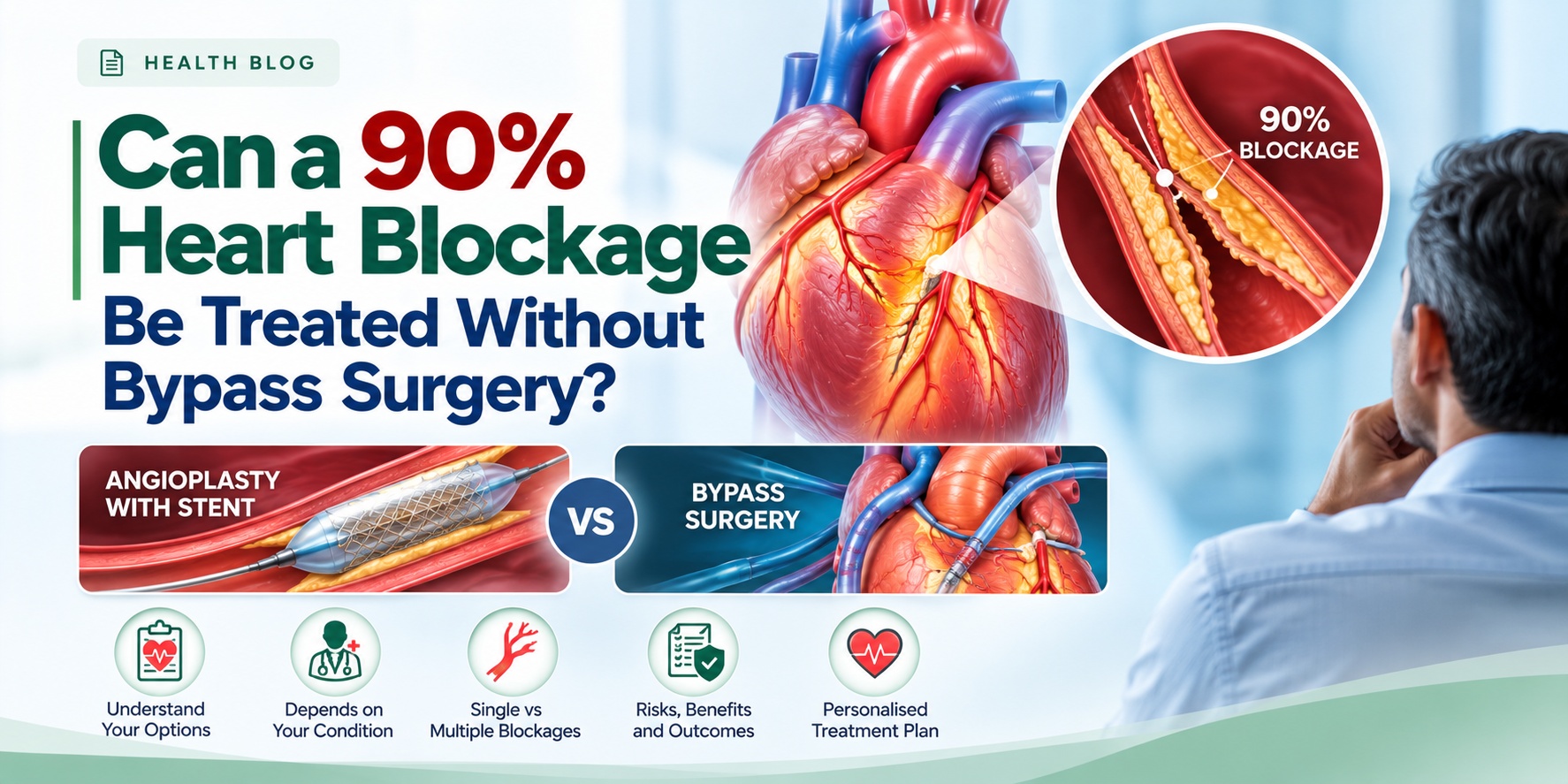
Being told that you have a 90% heart blockage can be frightening. For many patients and their families, the first question is: Does this mean bypass surgery is unavoidable?
The answer is not necessarily.
A 90% blockage in a coronary artery is a severe narrowing, but it does not automatically mean that every patient needs coronary artery bypass grafting (CABG). Depending on the location of the blockage, the number of arteries affected, the severity of symptoms, heart function, and other medical conditions, treatment may involve medications, angioplasty with stent placement, or bypass surgery.
The most important point is that the percentage of blockage alone cannot determine the best treatment.
Some patients with a severe blockage in a single coronary artery may be suitable for angioplasty, while others with multiple complex blockages, left main coronary artery disease, or diabetes may benefit more from bypass surgery.
In this article, we explain what a 90% heart blockage means, whether it can be treated without bypass surgery, the differences between stents and bypass surgery, and how specialists decide which treatment is most appropriate.
What Does a 90% Heart Blockage Mean?
The heart receives oxygen-rich blood through the coronary arteries. These arteries supply the heart muscle with the oxygen and nutrients required for continuous pumping.
Over time, fatty deposits called plaques may accumulate within the walls of coronary arteries. This process is known as atherosclerosis.
As plaque builds up, the space available for blood flow becomes narrower.
When a coronary angiogram reports a 90% blockage, it generally means that the diameter of the artery’s internal channel has narrowed by approximately 90% at that location.
Such a narrowing can significantly restrict blood flow, particularly when the heart needs more oxygen during physical activity or emotional stress.
However, the actual impact depends on several factors, including:
- Which coronary artery is affected.
- Whether the blockage is near the beginning or farther along the artery.
- How much heart muscle depends on that artery.
- Whether other coronary arteries are also narrowed.
- Whether collateral blood vessels have developed.
- Whether the patient is experiencing a heart attack or has stable coronary artery disease.
A 90% narrowing is anatomically severe, but the urgency and type of treatment must be determined from the complete clinical picture.
Can a 90% Heart Blockage Be Treated Without Bypass Surgery?
Yes. In selected patients, a 90% coronary artery blockage can be managed without bypass surgery.
There are three broad treatment approaches.
- Medical Management
Some patients with stable coronary artery disease may be managed with guideline-directed medical therapy.
Depending on their condition, treatment may include antiplatelet medicines, cholesterol-lowering therapy, medications to control blood pressure and angina, and lifestyle changes.
Medical treatment is important for almost everyone with coronary artery disease, including those who undergo angioplasty or bypass surgery.
However, medications do not usually eliminate an established 90% atherosclerotic narrowing.
In carefully selected stable patients, medications may adequately control symptoms and reduce cardiovascular risk without an immediate procedure.
This is not appropriate for every severe blockage, especially when high-risk anatomy or acute coronary syndrome is present.
- Angioplasty and Stent Placement
Coronary angioplasty, also known as percutaneous coronary intervention (PCI), is a minimally invasive procedure used to open narrowed coronary arteries.
During angioplasty, a cardiologist advances a thin catheter through a blood vessel, commonly from the wrist or groin, towards the affected coronary artery.
A balloon is used to expand the narrowed segment, and a stent is commonly placed to help keep the artery open.
Angioplasty may be suitable for certain severe single-vessel blockages and selected cases involving more than one artery.
However, not every 90% blockage can be safely or effectively treated with a stent.
The length, location, calcification, and complexity of the blockage influence the decision.
- Coronary Artery Bypass Surgery
Coronary artery bypass grafting (CABG) creates an alternative pathway for blood to reach heart muscle beyond severely narrowed coronary arteries.
During surgery, a cardiac surgeon uses a suitable blood vessel, commonly from the chest, arm, or leg, to bypass the diseased segment.
CABG is particularly important in selected patients with complex multivessel coronary artery disease, significant left main disease, or diabetes with extensive coronary involvement.
It may also be recommended when angioplasty is technically unsuitable or unlikely to provide a durable result.
When Can a 90% Heart Blockage Be Treated With a Stent?
Angioplasty may be considered when the coronary anatomy is suitable and the expected benefits outweigh the risks.
Factors that may favour PCI include:
- A severe narrowing affecting one major coronary artery.
- A relatively short and accessible blockage.
- Coronary anatomy suitable for stent placement.
- Limited complexity of the overall coronary disease.
- Certain acute coronary syndromes requiring urgent restoration of blood flow.
However, a patient with a 90% blockage in one artery and a patient with severe disease involving three major coronary arteries may require very different treatment approaches.
The decision also depends on whether the patient has stable symptoms, unstable angina, or an acute heart attack.
Important: During an acute heart attack, emergency angioplasty may be the preferred treatment when indicated and available. Patients should not delay emergency care while considering elective treatment options.
When Is Bypass Surgery Better Than Angioplasty?
Although angioplasty is less invasive, bypass surgery may offer important advantages in certain groups of patients.
- Multiple Coronary Artery Blockages
When several coronary arteries have significant and complex disease, bypass surgery may provide more complete and durable revascularisation.
This is particularly relevant when blockages are extensive, diffuse, or technically difficult to treat with multiple stents.
- Left Main Coronary Artery Disease
The left main coronary artery supplies a large portion of the heart muscle through its branches.
Significant narrowing in this artery can be especially concerning.
CABG is often an important treatment option for significant left main disease, particularly when coronary anatomy is complex.
PCI may also be appropriate in selected patients with suitable anatomy after multidisciplinary evaluation.
- Diabetes With Multivessel Coronary Disease
Patients with diabetes often develop more extensive and diffuse coronary artery disease.
For suitable patients with diabetes and multivessel disease involving the left anterior descending artery, clinical guidelines frequently favour CABG over PCI because of long-term outcome advantages.
However, the treatment decision must account for surgical risk, anatomy, patient preferences, and other health conditions.
- Complex or Heavily Calcified Blockages
Severely calcified, long, or complex coronary lesions may make angioplasty more challenging.
Advanced PCI techniques can treat some of these lesions, but bypass surgery may be preferable when the overall coronary anatomy is unsuitable for durable stenting.
- Reduced Heart Pumping Function
In selected patients with multivessel coronary artery disease and significantly reduced left ventricular ejection fraction, CABG may improve long-term outcomes.
The benefits depend on the severity of heart dysfunction, coronary anatomy, and overall clinical condition.
Stent vs Bypass Surgery for 90% Heart Blockage
| Factor | Angioplasty with stent | Bypass surgery (CABG) |
| Procedure | Catheter-based | Surgical |
| Incisions | Small vascular access puncture | Chest incisions, depending on technique |
| Recovery | Usually faster | Usually longer |
| Hospital stay | Often shorter | Usually several days |
| Suitable cases | Selected coronary blockages | Selected complex or multivessel disease |
| Repeat procedures | May be needed more often in some patient groups | Often provides durable revascularisation in suitable patients |
| Long-term outcomes | Depend on anatomy and clinical condition | May be superior in certain high-risk anatomical groups |
Neither procedure is universally better.
A treatment that is appropriate for one patient may be unsuitable for another, even if both have a reported 90% blockage.
Can Medicines Remove a 90% Heart Blockage?
This is one of the most frequently asked questions by patients diagnosed with coronary artery disease.
Certain medications, especially intensive cholesterol-lowering therapies, can stabilise atherosclerotic plaques and sometimes produce modest plaque regression.
However, medicines do not reliably dissolve or completely remove a severe 90% coronary artery blockage.
Their primary goals include reducing the risk of heart attack, controlling symptoms, slowing disease progression, and improving long-term cardiovascular outcomes.
Depending on the patient, doctors may prescribe:
- Antiplatelet medicines to reduce clot-related risk.
- Statins or other lipid-lowering medications.
- Beta-blockers or calcium channel blockers for selected indications.
- Nitrates for angina relief.
- Other medicines for blood pressure, diabetes, or heart failure.
Patients should never stop prescribed cardiac medicines without consulting their treating clinician.
Is a 90% Heart Blockage Life-Threatening?
A 90% coronary artery narrowing is a serious finding and requires timely specialist assessment.
However, the immediate risk cannot be predicted from the percentage alone.
Some patients with severe stable coronary artery disease may remain clinically stable with appropriate treatment, while others may experience unstable symptoms or acute coronary events.
A heart attack commonly occurs when an atherosclerotic plaque ruptures or erodes and a blood clot forms, suddenly restricting blood flow.
Importantly, heart attacks can also arise from plaques that were not previously causing a 90% narrowing.
Therefore, the risk of heart attack depends on more than the severity of one visible blockage.
Warning Signs That Require Emergency Medical Attention
Seek emergency care immediately if you experience:
- Chest pressure, tightness, or pain lasting several minutes or recurring.
- Pain spreading to the arm, jaw, neck, back, or shoulder.
- Sudden breathlessness.
- Cold sweating.
- Fainting or severe weakness.
- Chest discomfort accompanied by nausea or vomiting.
Do not drive yourself to the hospital if you suspect a heart attack. Seek emergency medical assistance.
What Tests Help Doctors Decide Between Stent and Bypass Surgery?
The treatment decision usually involves several investigations.
Coronary Angiography
Coronary angiography helps identify the number, location, and severity of coronary artery narrowings.
It also provides information about the complexity of coronary anatomy.
Echocardiography
An echocardiogram evaluates heart structure, valve function, and the pumping ability of the left ventricle.
ECG and Cardiac Blood Tests
An electrocardiogram and cardiac biomarkers, including troponin, are important when an acute coronary syndrome is suspected.
Functional and Physiological Assessment
In selected cases, stress testing or invasive physiological measurements such as fractional flow reserve (FFR) may help determine whether a coronary narrowing is restricting blood flow.
FFR is generally most useful for intermediate lesions rather than an obviously severe 90% narrowing.
SYNTAX Score and Heart Team Evaluation
The SYNTAX score is a tool used to assess the anatomical complexity of coronary artery disease.
For patients with complex disease, a multidisciplinary Heart Team involving interventional cardiologists and cardiac surgeons may review the findings and recommend an appropriate treatment strategy.
Can a Patient With 90% Heart Blockage Live Without Surgery?
Some patients with severe coronary artery narrowing can be managed without immediate surgery, particularly when their disease is stable and medical treatment adequately controls symptoms.
However, this decision should never be based solely on the absence of chest pain.
Some patients with significant coronary disease experience minimal symptoms, especially those with diabetes or reduced physical activity.
Others may have high-risk coronary anatomy despite feeling relatively well.
The decision to defer revascularisation should follow a thorough evaluation by the treating cardiac team.
Regular follow-up, adherence to medication, risk-factor control, and recognition of new symptoms remain essential.
Does a 90% Heart Blockage Always Cause Chest Pain?
No.
Some individuals with severe coronary artery disease experience typical angina, while others may develop breathlessness, fatigue, or reduced exercise tolerance.
A proportion of patients may have silent myocardial ischaemia, where the heart muscle receives inadequate blood supply without typical chest discomfort.
Symptoms can vary according to age, diabetes status, associated medical conditions, and other factors.
Therefore, the absence of chest pain does not necessarily mean a severe blockage is harmless.
Can Minimally Invasive Bypass Surgery Be an Option?
For selected patients who require surgical revascularisation, minimally invasive cardiac surgery may be considered.
Unlike conventional CABG, which commonly involves opening the breastbone, certain minimally invasive approaches use smaller incisions to access the heart.
One technique is minimally invasive direct coronary artery bypass (MIDCAB), which may be suitable for selected patients requiring bypass of the left anterior descending artery.
In carefully chosen cases, hybrid coronary revascularisation may combine minimally invasive bypass surgery with angioplasty of other coronary arteries.
Potential advantages in appropriately selected patients may include reduced surgical trauma and faster recovery.
However, minimally invasive bypass surgery is not suitable for everyone.
The feasibility depends on coronary anatomy, the number of vessels requiring treatment, associated medical conditions, and the expertise of the surgical team.
How to Reduce the Risk of Future Heart Blockages
Regardless of whether a patient receives medications, a stent, or bypass surgery, long-term management of coronary artery disease is essential.
Important measures include:
- Control cholesterol: Follow prescribed lipid-lowering therapy and recommended cholesterol targets.
- Manage blood pressure: Maintain blood pressure within the range advised by your doctor.
- Control diabetes: Effective diabetes management helps reduce cardiovascular risk.
- Avoid tobacco: Smoking cessation is one of the most important preventive measures.
- Follow a heart-healthy diet: Emphasise vegetables, fruits, whole grains, legumes, nuts, and appropriate sources of protein while limiting trans fats and excessive saturated fats.
- Stay physically active: Follow a medically appropriate exercise plan. Patients with untreated severe coronary disease should obtain medical advice before starting strenuous exercise.
- Attend regular follow-ups: Continue prescribed medicines and recommended cardiac rehabilitation or monitoring.
Even after successful angioplasty or bypass surgery, coronary artery disease can progress if underlying risk factors are not addressed.
When Should You Consult a Cardiac Surgeon in Delhi?
If coronary angiography has revealed a severe blockage, particularly involving multiple coronary arteries or the left main artery, specialist evaluation can help determine the most suitable treatment.
Patients considering bypass surgery in Delhi, minimally invasive cardiac surgery, or alternatives to bypass surgery should understand the expected benefits and risks of each approach.
Dr Vaibhav Mishra, Senior Director – Cardiac Sciences, is associated with cardiac surgical care and the evaluation of patients requiring coronary revascularisation.
A cardiac surgical consultation can help clarify whether conventional CABG, a minimally invasive approach, or another treatment strategy is appropriate based on the patient’s coronary anatomy and overall health.
For complex cases, multidisciplinary discussion between the treating cardiologist and cardiac surgeon can support shared decision-making.
Frequently Asked Questions
- Can a 90% heart blockage be treated with a stent?
Yes. Some 90% coronary artery blockages can be treated using angioplasty and stent placement. Suitability depends on the artery involved, lesion complexity, associated blockages, and clinical condition.
- Is bypass surgery compulsory for 90% heart blockage?
No. Bypass surgery is not automatically required for every 90% blockage. Some patients may be treated with angioplasty or medical management, while others may benefit more from CABG.
- Can a 90% heart blockage be reversed naturally?
There is no proven natural remedy that reliably reverses a severe 90% coronary narrowing. Lifestyle changes and prescribed medications can reduce cardiovascular risk and may slow or partially reverse plaque progression, but they do not reliably eliminate severe blockages.
- Is a stent safer than bypass surgery?
Angioplasty is generally less invasive and usually involves faster recovery. However, the overall balance of safety and long-term benefit depends on the patient’s coronary anatomy, surgical risk, and other medical conditions.
- Can a person survive with a 90% heart blockage?
Yes. Many people live with severe coronary artery disease under appropriate medical care. However, the condition can be serious, and individual risk requires specialist assessment.
- What happens if a 90% heart blockage is left untreated?
Possible consequences include worsening angina, reduced exercise tolerance, heart attack, or heart failure. However, outcomes vary, and some stable patients may be managed successfully with medical treatment rather than immediate revascularisation.
- Is bypass surgery better for three blocked arteries?
CABG is often favoured for selected patients with complex three-vessel disease, particularly when diabetes or reduced heart pumping function is present. However, coronary anatomy and individual clinical factors determine the best approach.
- How long does recovery take after bypass surgery?
Recovery varies according to the surgical approach, patient health, and complications. After conventional CABG, many patients require approximately 6–12 weeks for substantial recovery, although some activities may resume earlier. Minimally invasive approaches may allow faster recovery in selected patients.
Conclusion
A 90% heart blockage is a serious medical finding, but it does not automatically mean bypass surgery is the only treatment option.
For some patients, angioplasty with stent placement may be appropriate. Others with stable coronary artery disease may be managed with guideline-directed medical therapy, while patients with complex multivessel disease, significant left main disease, or certain high-risk conditions may benefit more from bypass surgery.
The most important factor is not simply how severe the blockage appears on an angiogram, but how the disease affects the heart and which treatment offers the best balance of safety, symptom relief, and long-term outcomes.
The right treatment for a 90% heart blockage depends on the patient—not just the percentage.
If you or a family member has been diagnosed with severe coronary artery disease, seek a comprehensive evaluation from a qualified cardiac specialist before making treatment decisions.