
Can Blockages Return After CABG? Understanding Life After Heart Bypass Surgery
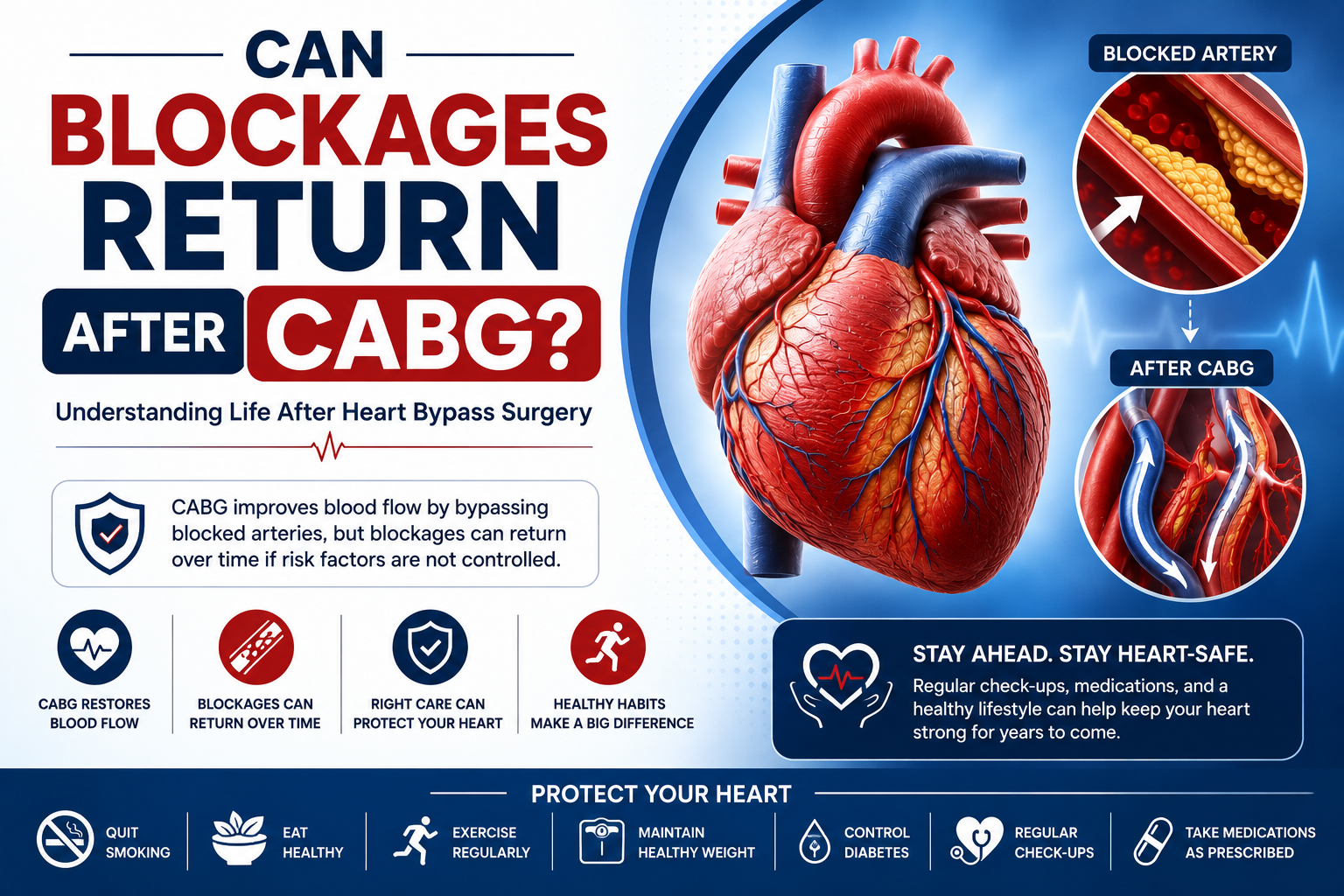
Can Blockages Return After CABG? The Short Answer is Yes—But There’s More to the Story
One of the most common questions patients ask after undergoing Coronary Artery Bypass Grafting (CABG) is, “Can my heart arteries become blocked again?”
The answer is yes, but it does not mean that the surgery has failed.
CABG is one of the most effective treatments for restoring blood flow to the heart in people with significant coronary artery disease. However, bypass surgery does not cure atherosclerosis—the underlying disease that causes plaque to build up inside the arteries. If risk factors such as high cholesterol, diabetes, smoking, high blood pressure, obesity, or an unhealthy lifestyle are not well controlled, both the native coronary arteries and, over time, the bypass grafts themselves can develop new narrowing or blockages.
The good news is that many patients enjoy years or even decades of improved quality of life after CABG. With regular follow-up, appropriate medications, and heart-healthy lifestyle changes, the chances of keeping the grafts functioning well can be significantly improved.
What is CABG?
Coronary Artery Bypass Grafting (CABG) is a surgical procedure performed to improve blood flow to the heart muscle when one or more coronary arteries are significantly narrowed or blocked.
Instead of removing the blockage, the surgeon creates a new pathway for blood to reach the heart by using a healthy blood vessel (called a graft) taken from another part of the body.
Common grafts include:
- Internal mammary artery (from the chest)
- Radial artery (from the forearm)
- Saphenous vein (from the leg)
These grafts bypass the blocked portion of the coronary artery, allowing oxygen-rich blood to reach the heart muscle.
Why Do Heart Arteries Become Blocked?
Coronary artery disease develops gradually due to atherosclerosis, a process in which fatty deposits (plaques) accumulate within the artery walls.
Several factors contribute to plaque formation, including:
- High cholesterol
- High blood pressure
- Diabetes
- Smoking
- Obesity
- Physical inactivity
- Family history
- Chronic kidney disease
- Stress
- Increasing age
Because atherosclerosis is a chronic condition, it can continue to progress even after successful bypass surgery if these risk factors are not adequately managed.
Can the Original Heart Arteries Become Blocked Again?
Yes.
The coronary arteries that were already affected by atherosclerosis can continue to accumulate plaque over time.
This does not necessarily indicate that the bypass surgery has failed. Rather, it reflects the ongoing nature of coronary artery disease.
In many cases, the bypass graft continues to supply blood to the heart despite further narrowing of the original artery.
Can Bypass Grafts Also Become Blocked?
Yes.
Although bypass grafts are designed to restore blood flow, they can also develop narrowing or blockage over time.
The likelihood depends on several factors, including the type of graft used, the patient’s overall health, and long-term control of cardiovascular risk factors.
Arterial Grafts
Arterial grafts—particularly the internal mammary artery—are generally associated with excellent long-term durability and remain open in many patients for years.
Vein Grafts
Vein grafts, such as those taken from the leg, may be more susceptible to narrowing over time because they are exposed to higher arterial pressures than they were designed to withstand.
Your cardiac surgeon carefully selects the most appropriate grafts based on your individual anatomy and clinical condition.
What Increases the Risk of Graft Blockage?
Several factors may contribute to graft disease over time:
Smoking
Smoking damages blood vessels, promotes inflammation, and accelerates plaque formation.
Uncontrolled Diabetes
Poor blood sugar control increases the risk of vascular complications and may contribute to faster progression of coronary artery disease.
High LDL Cholesterol
Elevated LDL (“bad”) cholesterol plays a central role in plaque development.
High Blood Pressure
Persistently elevated blood pressure can damage artery walls and accelerate atherosclerosis.
Obesity
Excess body weight is associated with diabetes, hypertension, and abnormal cholesterol levels.
Physical Inactivity
Regular exercise supports cardiovascular health and helps reduce several risk factors.
Not Taking Prescribed Medicines
Medications such as antiplatelet agents, statins, and other heart medicines help reduce the risk of future cardiovascular events. Stopping them without medical advice can increase the risk of complications.
Warning Signs That Should Not Be Ignored After CABG
Many patients remain symptom-free for years after surgery. However, you should seek prompt medical evaluation if you experience:
- Chest pain or pressure
- Breathlessness during activity
- Reduced exercise tolerance
- Pain radiating to the arm, jaw, neck, or back
- Unexplained fatigue
- Palpitations
- Dizziness or fainting
These symptoms do not always mean a graft is blocked, but they should never be ignored.
How Are Recurrent Blockages Diagnosed?
If symptoms suggest reduced blood flow to the heart, your cardiologist or cardiac surgeon may recommend appropriate investigations, which may include:
- Electrocardiogram (ECG)
- Echocardiography
- Stress testing
- CT Coronary Angiography
- Coronary Angiography
The choice of test depends on your symptoms, medical history, and clinical assessment.
Can Recurrent Blockages Be Treated?
Yes.
Treatment depends on where the blockage has occurred and how severe it is.
Options may include:
Lifestyle Modification
For mild disease, improving diet, exercise, smoking cessation, and weight management remain essential.
Medication Optimisation
Adjustments to cholesterol-lowering medicines, antiplatelet therapy, blood pressure treatment, or diabetes management may be recommended.
Coronary Angioplasty
Some patients may benefit from balloon angioplasty and stent placement.
Redo CABG
In selected patients with complex disease, repeat bypass surgery may be considered after careful evaluation.
The treatment plan is individualized based on clinical findings and imaging results.
How Can You Reduce the Risk of Future Blockages?
While no treatment can completely eliminate the risk of atherosclerosis, adopting heart-healthy habits can significantly reduce the likelihood of disease progression.
Quit Smoking
Stopping smoking is one of the most effective ways to protect your heart and blood vessels.
Follow a Heart-Healthy Diet
Choose a diet rich in:
- Fresh fruits and vegetables
- Whole grains
- Lean proteins
- Legumes
- Nuts
- Healthy fats
Limit processed foods, trans fats, sugary beverages, and excessive salt.
Exercise Regularly
Aim for regular physical activity as recommended by your healthcare team. Cardiac rehabilitation programs can provide structured guidance after surgery.
Control Blood Pressure
Maintain blood pressure within the target range advised by your doctor.
Manage Diabetes
Good blood sugar control helps reduce damage to blood vessels.
Lower Cholesterol
Continue cholesterol-lowering medication if prescribed and follow dietary recommendations.
Attend Regular Follow-up Appointments
Routine medical reviews help identify problems early and allow timely adjustments to treatment.
How Long Do Bypass Grafts Last?
The longevity of bypass grafts varies depending on the type of graft, patient-related factors, and long-term management of cardiovascular risk factors.
Arterial grafts, particularly the internal mammary artery, generally have excellent long-term patency, while vein grafts may develop narrowing earlier in some patients. However, many people enjoy excellent outcomes for years after CABG with appropriate medical care and healthy lifestyle choices.
Why Choosing an Experienced Cardiac Surgeon Matters
Successful CABG extends beyond the operation itself. It involves careful patient selection, meticulous surgical technique, and long-term follow-up.
Dr. Vaibhav Mishra specializes in adult cardiac surgery, including coronary artery bypass grafting (CABG), minimally invasive cardiac surgery, valve surgery, and complex cardiac procedures. Every patient undergoes a comprehensive evaluation, and treatment plans are tailored to the individual’s condition, overall health, and long-term goals.
The emphasis is not only on performing technically sound surgery but also on guiding patients through recovery, secondary prevention, and lifelong heart health.
Frequently Asked Questions
Does CABG permanently cure coronary artery disease?
No. CABG improves blood flow to the heart but does not cure the underlying process of atherosclerosis. Long-term risk factor control remains essential.
Can bypass grafts become blocked?
Yes. Both native coronary arteries and bypass grafts can develop narrowing over time, although the likelihood varies depending on the type of graft and individual risk factors.
How long do bypass grafts usually last?
The durability of grafts varies. Arterial grafts generally remain open longer than vein grafts, but outcomes depend on overall cardiovascular health and adherence to treatment.
Can exercise help after CABG?
Yes. Regular exercise, under medical guidance, is an important part of cardiac rehabilitation and long-term heart health.
Is chest pain years after bypass surgery normal?
No. Any new or recurring chest pain should be evaluated promptly to determine the cause.
Can I prevent future blockages?
You can significantly reduce the risk by taking prescribed medications, avoiding smoking, controlling blood pressure, cholesterol, and diabetes, maintaining a healthy weight, exercising regularly, and attending routine follow-up appointments.
Conclusion
CABG is one of the most effective treatments for restoring blood flow to the heart in patients with significant coronary artery disease. However, it is important to understand that bypass surgery treats the consequences of blocked arteries—it does not stop the underlying disease process.
With appropriate medications, healthy lifestyle changes, regular follow-up, and management of cardiovascular risk factors, many patients enjoy excellent long-term outcomes and an active life after surgery.
If you have previously undergone CABG and are experiencing new symptoms such as chest pain, breathlessness, or reduced exercise tolerance, consult an experienced cardiac surgeon or cardiologist without delay. Early evaluation can help identify potential problems and guide timely treatment.