
Is Breathlessness While Climbing Stairs a Heart Warning Sign?
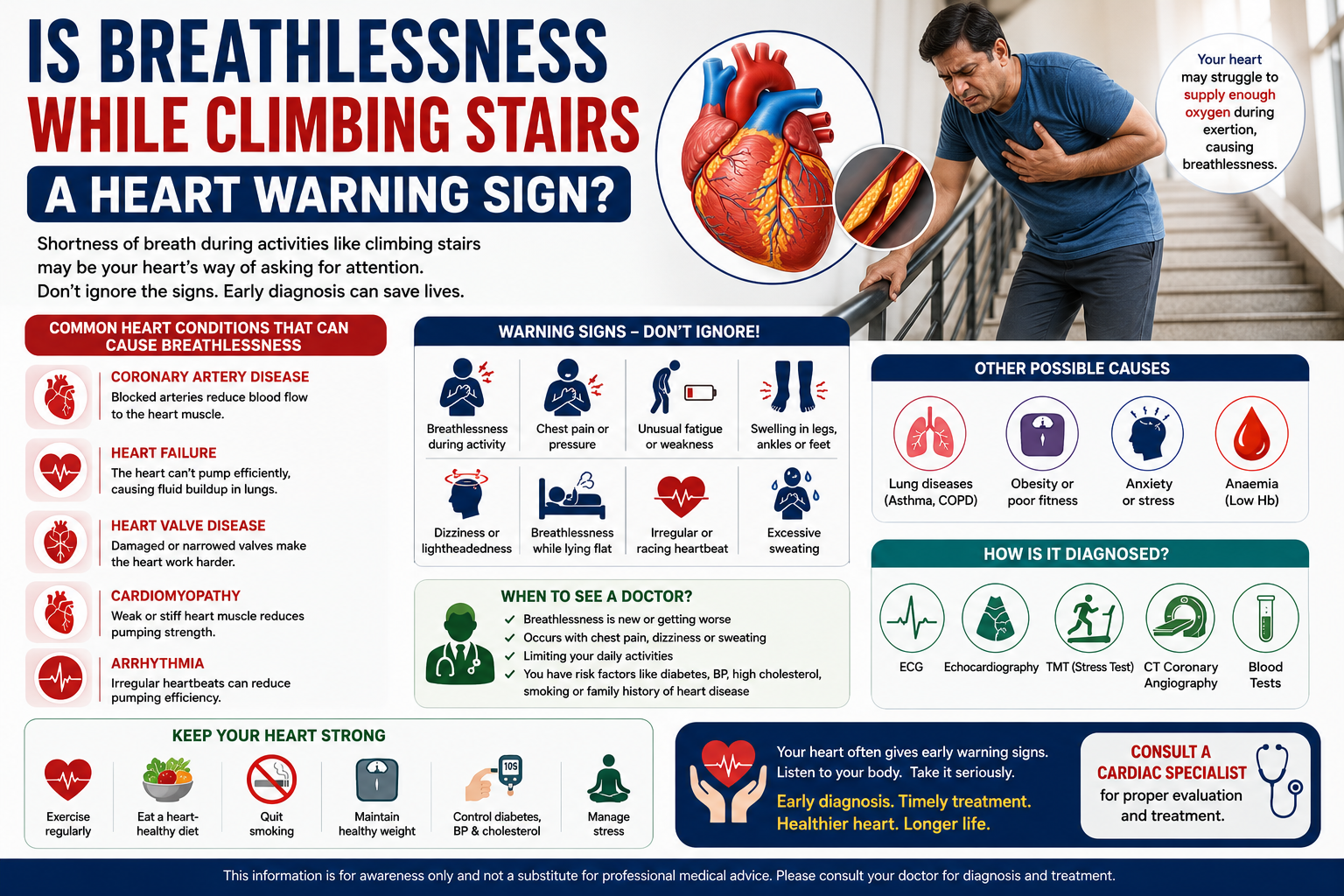
Many people experience shortness of breath while climbing stairs and often ignore it as a sign of aging, lack of fitness, stress, or weight gain. While occasional breathlessness after intense activity can be normal, persistent or worsening breathlessness during routine activities may sometimes indicate an underlying heart problem.
In many cases, the heart gives subtle warning signs long before a major cardiac event occurs. Breathlessness while walking, climbing stairs, or performing daily activities may be one of the earliest indicators that the heart is struggling to pump blood efficiently.
Understanding when breathlessness is normal and when it could be a serious heart warning sign can help patients seek timely medical attention and prevent complications.
What Is Breathlessness?
Breathlessness, also called shortness of breath or dyspnea, refers to difficulty breathing or the sensation of not getting enough air.
People may describe it as:
- Feeling “out of breath”
- Chest tightness
- Difficulty catching breath
- Heavy breathing
- Fatigue while walking
- Needing to stop frequently while climbing stairs
Mild breathlessness after strenuous exercise is normal, but becoming breathless during routine daily activities should not be ignored.
Can Breathlessness While Climbing Stairs Be Related to the Heart?
Yes. Breathlessness during physical activity can sometimes indicate reduced heart function or blocked blood flow to the heart.
When the heart cannot pump blood effectively, oxygen supply to the body decreases. As a result, the lungs and muscles struggle to meet oxygen demands during activity, causing shortness of breath.
This symptom is especially important if:
- It is new
- It is worsening
- It occurs with chest discomfort
- It limits daily activities
- It appears with fatigue or swelling
How Does the Heart Cause Breathlessness?
The heart and lungs work closely together. When the heart becomes weak or diseased, fluid may build up in the lungs or blood circulation may become inefficient.
This can happen due to:
- Blocked heart arteries
- Weak heart muscles
- Heart valve disease
- Heart failure
- Irregular heartbeat
As physical activity increases, the body requires more oxygen. If the heart cannot meet this demand, breathlessness develops.
Common Heart Conditions That Cause Breathlessness
- Coronary Artery Disease (Heart Blockages)
Blocked heart arteries reduce blood supply to the heart muscle.
Symptoms may include:
- Chest pain
- Breathlessness during exertion
- Fatigue
- Sweating
Breathlessness may sometimes be the only symptom, especially in diabetic patients.
- Heart Failure
Heart failure does not mean the heart stops working. It means the heart cannot pump blood efficiently.
Common symptoms:
- Breathlessness
- Swelling in legs
- Fatigue
- Difficulty lying flat
- Night-time breathing difficulty
- Heart Valve Disease
Damaged or narrowed heart valves force the heart to work harder.
Patients may experience:
- Breathlessness while climbing stairs
- Dizziness
- Fatigue
- Palpitations
- Cardiomyopathy
This condition weakens the heart muscles and affects pumping ability.
Symptoms often develop gradually and may initially appear only during physical activity.
- Arrhythmia (Irregular Heartbeat)
Abnormal heart rhythms can reduce efficient blood circulation and cause:
- Shortness of breath
- Palpitations
- Dizziness
- Weakness
When Is Breathlessness Considered Normal?
Not all breathlessness is dangerous.
Temporary breathlessness may occur due to:
- Intense exercise
- Obesity
- Lack of fitness
- Anxiety
- Climbing multiple floors quickly
Normal breathlessness usually:
- Improves quickly with rest
- Does not worsen progressively
- Is not associated with chest pain or dizziness
Warning Signs That Suggest a Heart Problem
Breathlessness may indicate a cardiac issue if it occurs with:
Chest Pain or Pressure
Especially during exertion.
Fatigue
Feeling unusually tired after mild activity.
Sweating
Excess sweating without heavy exertion.
Swelling in Feet or Legs
Fluid retention can indicate heart failure.
Dizziness or Fainting
Reduced blood flow to the brain may cause these symptoms.
Palpitations
Awareness of irregular or rapid heartbeat.
Breathlessness While Lying Down
Often seen in heart failure patients.
Breathlessness in Younger Adults: Should You Worry?
Heart disease is increasingly affecting younger adults due to:
- Stress
- Smoking
- Diabetes
- Obesity
- Sedentary lifestyle
- High cholesterol
Many young patients ignore early symptoms thinking they are “too young” for heart disease.
Persistent breathlessness should always be evaluated, regardless of age.
Can Breathlessness Be Caused by Lung Problems Instead?
Yes. Breathlessness can also occur due to:
- Asthma
- COPD
- Lung infection
- Pulmonary fibrosis
- Smoking-related lung disease
This is why proper diagnosis is essential.
Heart-Related Breathlessness vs Lung-Related Breathlessness
| Feature | Heart-Related | Lung-Related |
| Trigger | Physical exertion | Exertion or continuous |
| Chest pain | May occur | Less common |
| Swelling in legs | Common | Rare |
| Wheezing | Less common | Common |
| Lying flat difficulty | Common | Less common |
| Cough | Sometimes | Frequent |
Risk Factors for Heart Disease
People with the following conditions should take breathlessness seriously:
- Diabetes
- High blood pressure
- High cholesterol
- Smoking
- Obesity
- Family history of heart disease
- Sedentary lifestyle
- Stress
How Is the Cause Diagnosed?
Doctors may recommend:
ECG
Evaluates heart rhythm and blood supply.
Echocardiography
Assesses heart pumping and valve function.
TMT (Stress Test)
Checks heart performance during exercise.
CT Coronary Angiography
Detects blocked heart arteries.
Chest X-ray
Evaluates lungs and heart size.
Blood Tests
Check cholesterol, diabetes, and cardiac markers.
Can Breathlessness Be an Early Heart Attack Symptom?
Yes. Some patients experience breathlessness before a heart attack, especially:
- Women
- Elderly individuals
- Diabetic patients
In such cases, chest pain may be absent or mild.
Sudden unexplained breathlessness should never be ignored.
Treatment Depends on the Underlying Cause
If Caused by Heart Disease
Treatment may include:
- Lifestyle changes
- Medicines
- Angioplasty
- Bypass surgery
- Valve surgery
- Minimally invasive cardiac procedures
If Caused by Lifestyle Factors
Doctors may recommend:
- Weight loss
- Exercise
- Smoking cessation
- Stress management
- Diet modification
Lifestyle Changes to Improve Heart Health
Regular Exercise
Improves cardiac efficiency and stamina.
Healthy Diet
Focus on:
- Fruits
- Vegetables
- Whole grains
- Low salt intake
- Healthy fats
Stop Smoking
Smoking significantly damages blood vessels and lungs.
Manage Diabetes and BP
Control of chronic diseases reduces heart risk.
Maintain Healthy Weight
Obesity increases strain on the heart.
When Should You See a Heart Specialist?
Consult a cardiac specialist if:
- Breathlessness is increasing
- Daily activities become difficult
- You experience chest discomfort
- You have multiple heart risk factors
- Symptoms occur repeatedly
Early diagnosis can prevent severe heart complications.
Can Minimally Invasive Cardiac Surgery Help?
Yes. Modern cardiac surgery techniques now allow many heart conditions to be treated with:
- Smaller incisions
- Faster recovery
- Less pain
- Reduced hospital stay
Minimally Invasive Cardiac Surgery (MICS) has transformed treatment for selected cardiac patients.
Final Thoughts
Breathlessness while climbing stairs should not always be dismissed as simple tiredness or aging. In some cases, it may be an early warning sign of underlying heart disease.
The heart often gives subtle symptoms before a serious event occurs. Paying attention to unexplained breathlessness, fatigue, chest discomfort, or reduced stamina can help detect cardiac problems early.
Timely evaluation, lifestyle improvement, and modern treatment options can significantly improve heart health and quality of life.
If you are experiencing persistent breathlessness during routine activities, consult a heart specialist for proper evaluation.
FAQs
Is it normal to feel breathless while climbing stairs?
Mild breathlessness after intense exertion can be normal, but persistent or worsening breathlessness should be evaluated.
Can blocked arteries cause shortness of breath?
Yes. Reduced blood flow to the heart can decrease oxygen supply and cause breathlessness.
Is breathlessness always related to heart disease?
No. Lung disease, obesity, anxiety, and poor fitness can also cause breathlessness.
When should I worry about shortness of breath?
Seek medical attention if breathlessness is sudden, worsening, associated with chest pain, dizziness, or swelling.
Can young adults develop heart disease?
Yes. Heart disease is increasingly common in younger adults due to lifestyle-related risk factors.